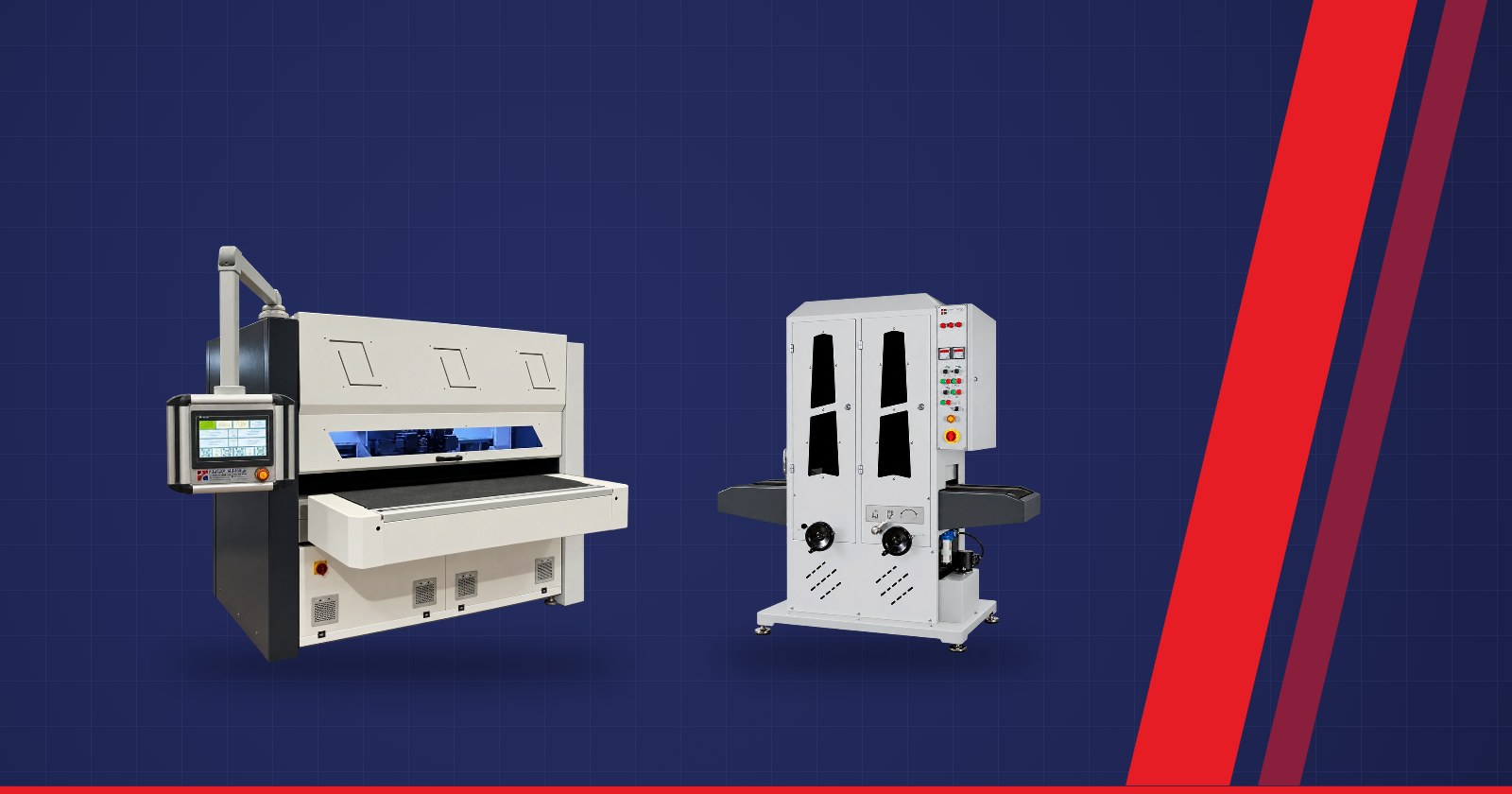
Short answer: Powder coating does not stay thick on a sharp edge. While the powder melts and cures, it pulls back from sharp corners and leaves a thin film there, so edges are where coated parts chip and start to rust first. Removing burrs and slag, rounding the edges to a consistent radius and, on oxygen-cut parts, removing the oxide layer gives the powder a surface it can cover evenly. Famak machines round edges up to 2 mm in the same pass as deburring.
This guide explains what laser cutting leaves on the edge, how much radius to aim for, a practical process sequence and which Famak machine fits which job.
Why powder coating fails on sharp edges
When powder melts in the oven, surface tension pulls the liquid coating away from sharp edges towards the flat faces. The result is edge thinning: the film on a 90° laser-cut edge can be a fraction of the thickness on the surface next to it. That thin film is the first place to chip during handling and assembly, and the first place where corrosion starts and creeps under the coating.
Burrs make the problem worse. A burr is a thin, sharp lip of metal that the coating cannot fully cover; if it breaks off later, bare steel is exposed under the paint. Dross on the bottom edge and spatter have the same effect.
What laser cutting leaves on the edge
| Defect | Where it appears | Effect on the coating | Removed by |
|---|---|---|---|
| Sharp cut edge | Top and bottom edge of every cut | Edge thinning, chipping, early corrosion | Edge rounding with brush or disc units |
| Burr and dross | Mostly the bottom edge | Coating cannot cover it; breaks off later | Deburring with abrasive belts |
| Oxide layer | Cut face of oxygen-cut steel | Weak adhesion, flaking | Oxide layer removal |
| Sharp hole edges | Around holes and cut-outs | Thin film, rust spots around holes | Edge rounding that reaches hole edges |
Our article Deburring After Laser Cutting compares manual grinding, vibratory deburring and belt sanding machines for the burr itself. This guide focuses on what happens next: getting the edge ready for coating.
How much edge radius do you need?
The answer depends on the coating specification and the environment the part will live in. Indoor parts with decorative coating are usually fine with a lightly broken edge. Parts for outdoor or corrosive environments need a more generous, consistent radius. Coating standards for corrosion protection ask for rounded edges in their highest preparation grades; ISO 8501-3, for example, requires rounded edges in grade P3, and 2 mm is a commonly specified minimum radius.
Famak edge rounding machines achieve an edge radius of up to 2 mm. What matters as much as the radius itself is consistency: every outer edge and every hole edge should get the same treatment, which is hard to achieve by hand on large batches.
A practical process sequence
- Laser cutting. Note whether the parts are cut with oxygen or nitrogen; it decides whether oxide removal is needed.
- Deburring. Remove burrs and dross from the bottom edge first, so the edge rounding units work on a clean edge.
- Edge rounding. Round outer edges and hole edges to the radius your coating specification asks for.
- Oxide removal. On oxygen-cut steel, remove the oxide layer from the cut face.
- Cleaning and pretreatment. Degrease and pretreat after mechanical finishing, so abrasive dust does not end up under the coating.
- Powder coating.
Steps 2 and 3 can be done in a single pass on a machine that combines sanding and edge rounding units, which removes one handling step between the laser and the paint line.
Which Famak machine for which job?
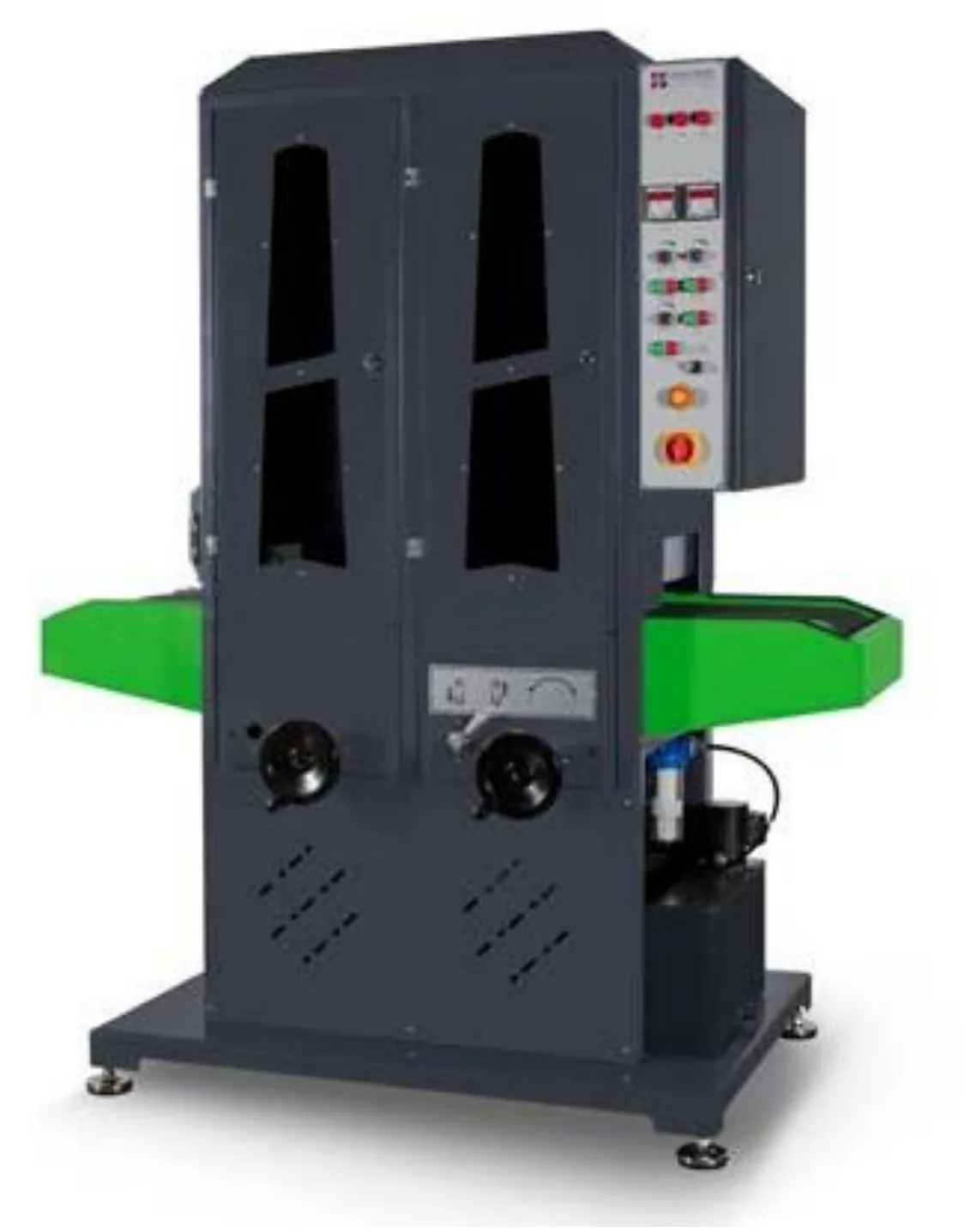
| Model | Capacity | What it does | Best for |
|---|---|---|---|
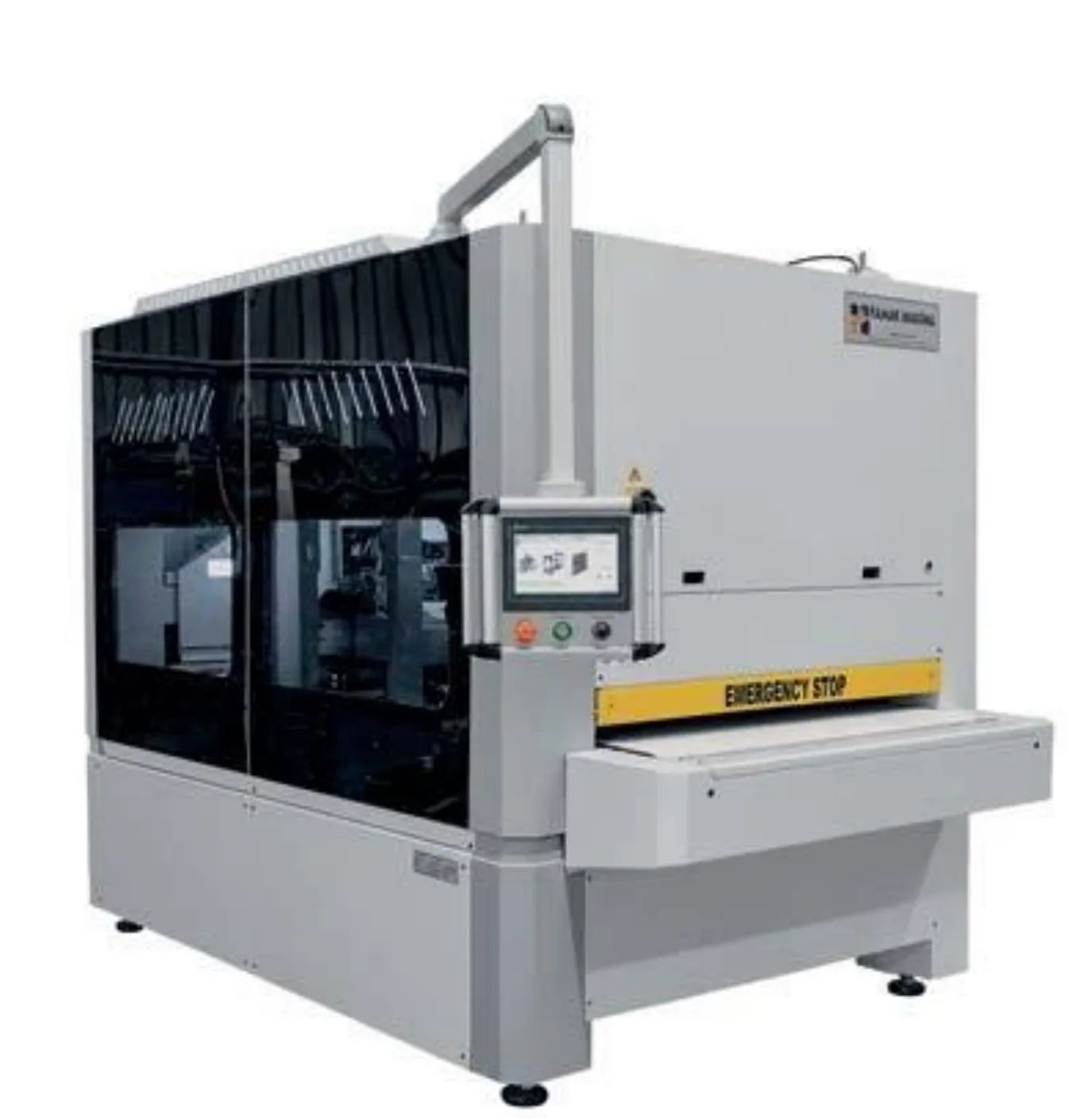
| 1350 4F | 0–1350 mm wide, 0–120 mm thick | Four units: deburring, edge softening and surface finish in one pass | Laser- and plasma-cut sheet parts in volume |
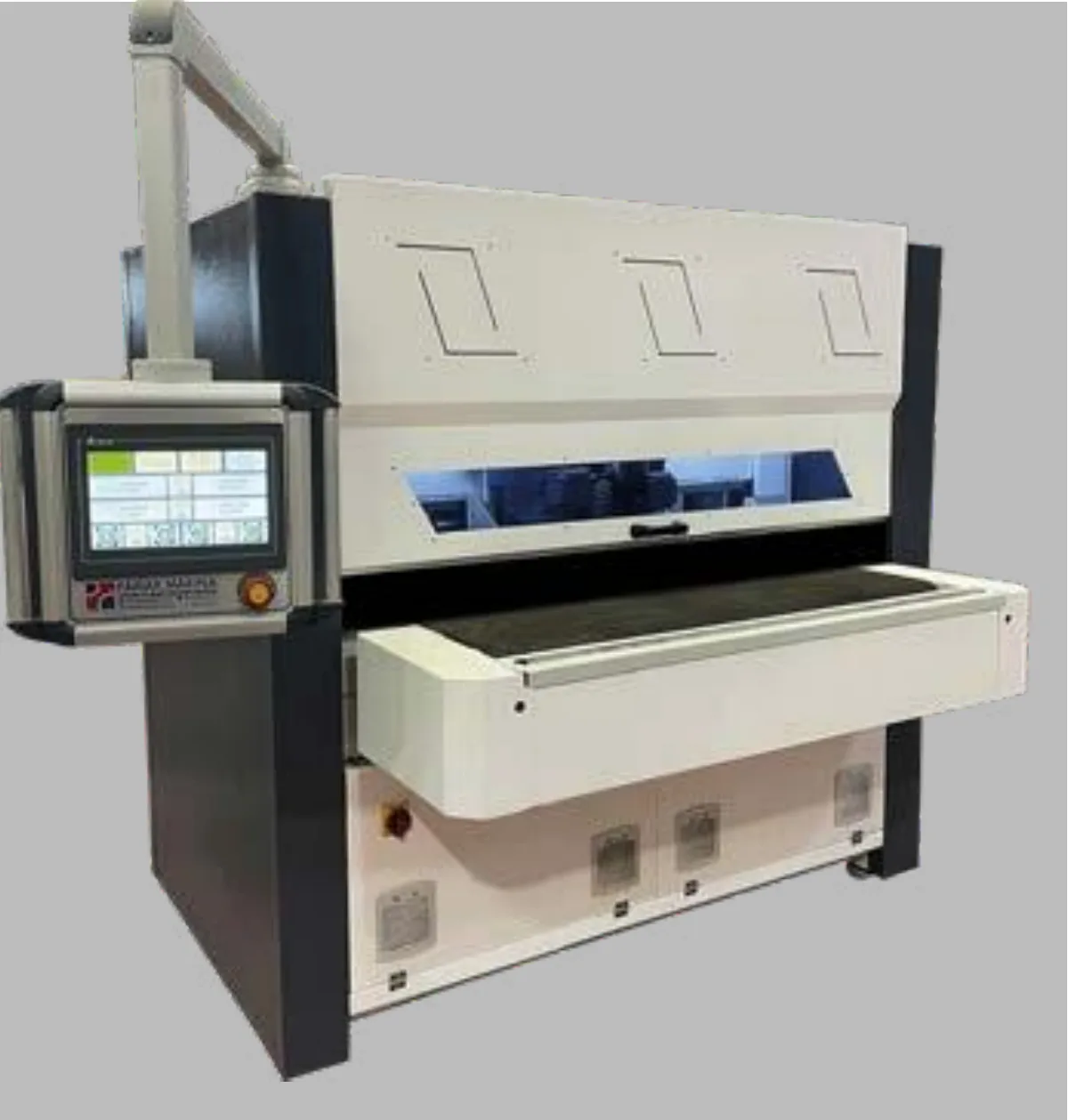
| 1350 R.D.D.W. | Configured to the job | Sanding, deburring and edge rounding in one line; 0.05 mm thickness setting, PLC | Wide sheet parts that need a complete finish before coating |
| DYZ 300 R.D. | 0–300 mm wide, 0.8–120 mm thick | Deburring, edge rounding and satin finish; vacuum conveyor table | Small stainless steel, aluminium and sheet parts |
See all edge rounding machines on the edge rounding page, or the deburring and oxide layer removal applications. Send us a few sample parts and your coating specification, and our technical team will suggest the configuration and the number of units you need.
Machines mentioned in this article
Frequently asked questions
Why does powder coating chip on edges?
During curing, the melted powder pulls away from sharp edges, so the film there is much thinner than on flat surfaces. Thin film on a sharp edge chips easily and is the first place where corrosion starts. Rounding the edge lets the coating build up evenly.
What edge radius is needed before powder coating?
It depends on the coating specification and the environment. Decorative indoor parts often only need a broken edge; parts for corrosive environments are commonly specified with a minimum radius of around 2 mm. Famak edge rounding machines achieve a radius of up to 2 mm.
Can deburring and edge rounding be done in one pass?
Yes. Machines such as the 1350 R.D.D.W. and DYZ 300 R.D. combine sanding and edge rounding units, so burrs are removed and edges are rounded in the same pass.
Are the edges of holes rounded too?
Yes. Brush and disc units reach the edges around holes and cut-outs as well as the outer contour, so the whole part is ready for coating.
Do I need to remove the oxide layer after laser cutting?
If the steel is cut with oxygen, the cut face carries an oxide layer that can weaken coating adhesion and flake off. Nitrogen-cut edges are usually free of this layer. Famak also builds machines for oxide layer removal.
Quote
Let's find the right machine for your job together
Share your material, part dimensions and production quantity, and our technical team will get back to you with the most suitable configuration.
By submitting this form you acknowledge that your personal data will be processed in accordance with our Privacy Notice.